Waiting for Amy Krouse Rosenthal’s New Book and Pondering Structure SOL#16

I’m a little bit of a freak when it comes to keeping up with what my favorite authors are working on.

Okay.  I’m more of a stalker.

Regardless. . . waiting is hard work.

But, finally . . . something is coming.

Something BIG.

Amy Krouse Rosenthal’s new book comes out next month!  

The title?

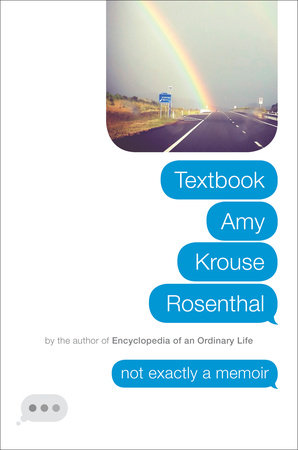
Textbook Amy Krouse Rosenthal:  Not Exactly A Memoir
9781101984543.jpg

She is genius.

I am giddy about the unique text structure she choose to write these “nonlinear reflections and insights”  (Penguin Random House Publishers).  Unlike most personal growth, memoir type books, Amy has organized this book by subject headings such as Social Studies, Math, Music, Language Arts, etc.  The writers at Penguin Random House Publishers describe it as such:

“Not exactly a memoir, not just a collection of observations, Textbook Amy Krouse Rosenthal is an exploration into the many ways we are connected on this planet and speaks to the awe, bewilderment, and poignancy of being alive.”

How can you not rush directly to Amazon and hit that dang one-click purchase button? It’s only at the pre-order state though.  It’s not coming out until August 9th.  Oh, the agony!

Her previous book, The Encyclopedia of an Ordinary Life, is also her brain child organizational structure to use for writing, non fiction or not. She gathers all of her snippets of wisdom, quotes, observations, lists and documented happenings and hangs them on the framework of the encyclopedia.

I am drawn to this right now as I mine through my own notebooks digging for gems, not knowing what they will become.  It’s life stuff and most of it is garbage, loads of blah, blah, blah, but there are some tidbits that I’d like to do something with. Organization is the framework of how to think about our ideas.  It helps us visualize the possibilities of what our writing could be.  Writing then begins to take shape.

The teacher in me also wants to use these books as mentor texts to share with students. We are required to teach our students the standard forms/genres of writing:  narrative, non-fiction and persuasive.  However, there are creative ways to organize writing that go beyond the 5 paragraph essay for persuasion, a basic personal narrative, or a categorical nonfiction report. Within these forms of writing, we teach how to write in chronological, compare/contrast, problem/solution and cause/effect text structures.  Of course, there are a variety of plot structures for narratives, as well.  All of these must be taught as they are used under the umbrella of an entire piece of work.

But, it’s the authors that go so out of the box with unique ways to organize a book that makes reading and writing exciting.  When I discover a new structure, energy sizzles.

I headed to my book shelves to seek out other ideas for possible structures for my own writing gobbledy-gook.  Surely, I had much to learn from right here in front of me.

Here are a few I found:

Lots of Candles, Plenty of Cake by Anna Quindlen

Anna organizes her memoir type reflections at midlife into chapters that focus on a theme such as:

stuff, girlfriends, generations, solitude, expectations, and faith  

For me, these themes could each be a book, yet she is able to synthesize it all into tight chapters.  This would take tons of work for me as I am more detail oriented.

Mining my own notebooks, I think I would choose topics with more specificity, such as:

popcorn, sugar, hair, pie, walking, hips and knees, Captain Morgan, coffee and dogs

Perhaps each of these could be a vignette under a larger theme or section like:

Addictions, Wisdom, Body, Soul, Heart, Mind, Marriage

This is a possibility.  I love to think about what is possible.

The Rural Life by Verlyn Klinkenborg

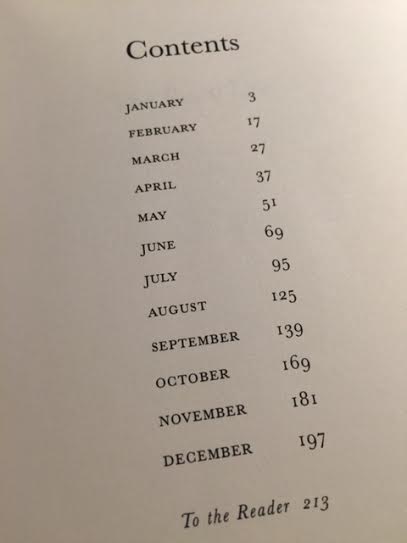
Verlyn writes about his life in the country.  By Month.
7f7468ca-fb5e-42b0-abbf-da4d8c76e896.jpg

Love. Love. Love.

We live in seasons.  I have realized over the years, that I go through many of the same experiences every September, just as I do in February.  The book could be called, The Teaching Life, The Mother’s Life, or even The Human Life.  The chapters could be narratives, poems or reflections.

Again. . . so many possibilities with this structure.

You Learn by Living by Eleanor Roosevelt

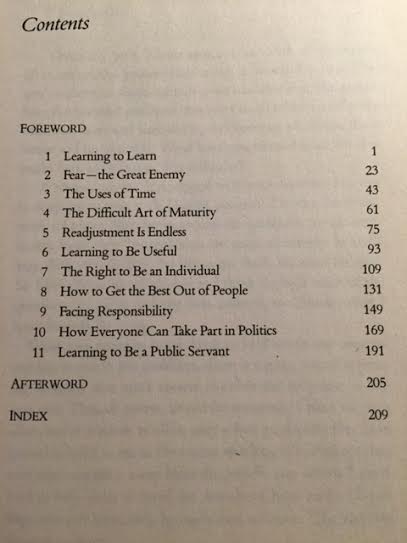
Eleanor organizes her book by important keys for living a more fulfilling life.  I think about this as each chapter being a lesson learned.  And, hopefully, a narrative to detail how she learned that lesson.  What lessons have I learned by midlife?  Are there lessons that I still need to learn?  I know there are lessons I am working on every day of my life.  As I scan over my pages of writing, each entry holds a lesson.  Each story teaches us something about living on this Earth School and what it means to be human.

Would my book be lessons about teaching?  or just stuff I’ve learned along the way?

Hmmmmm. . . .
f3bb7a26-6348-4cc5-824c-4eca7f0e37cc

This reminds me of  Dorothy Allison’s Two or Three Things I know For Sure?  Could we not write a book on what we THINK we have figured out?

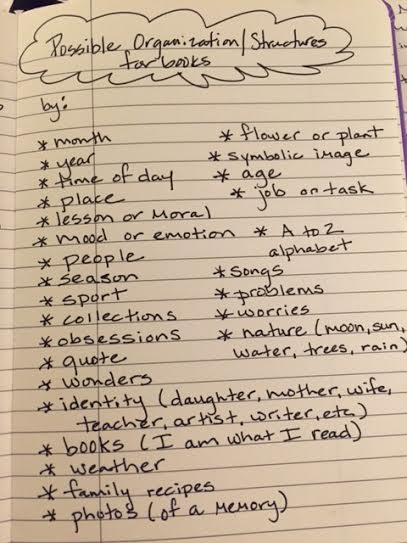
I had to generate a list of possible structures as well – just to have some fun in brainstorming session.
2164c4fd-8f31-45ec-9bfa-8cafdf354c79

The best teachers are other books, so I’m going to compile a good list of books to show my third graders what other authors have done to organize their books.  We can then generate our own list together.

Then, we can all dwell in the possibilities of what our writing might become.

Dreamers, we are.

Shari 🙂


Sharing My 2016 Summer Reading Stack

IMG_2940

“By opening your inner self to a book, you invite ideas and feelings that enrich and expand your interiority.  Reading is the making of a deeper self.” ~ John Miedema

I’m not sure where I would be without books.  Probably hanging on a ledge somewhere. Books have saved me over and over again and I know I would not be the person I am without the books I have read. We become what we read.

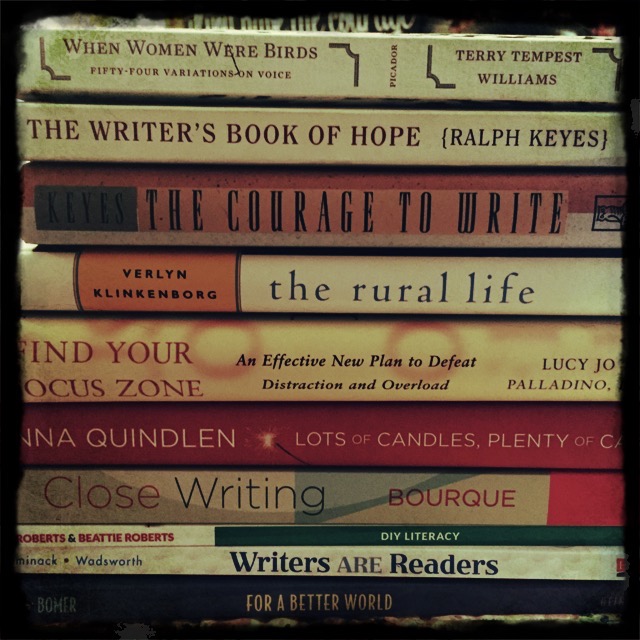
I love to know what others are reading, especially others who are mothers my age, educators, writers, artists, mid-lifers, thinkers, learners and readers.  So, I’m sharing my summer reading stack, not only to maybe inspire someone to read any of these books (so I have someone to talk to about them), but more so, in hopes that you’ll share your summer reads, too.

I try hard to read a variety of books over the summer, but I tend to migrate towards non-fiction; informational, memoirs, reflective vignettes. These kinds of books push me as a teacher and also give me guidance and insights as a writer and a human being.  I also have a fiction stack and a reread stack.  Those will have to be other posts. Yes, there are books everywhere.  They are my weakness and I’ll spend my money on books before I’ll buy myself new shoes or clothes.  Just because.

So, here is my non-fiction stack (I can’t wait to write about each one of these individually!):

For A Better World:  Reading and Writing for Social Action by Randy Bomer and Katherine Bommer (2001, Heinemann)

9780325002637-us


This book has been on my shelf since last summer.  With all that is happening in the world right now, it jumped off my shelf begging to be read.

On page five, these words had to be underlined:

“If we expect people to vote for the interests of the wounded and dispossessed, then people who are not poor have to be able to imagine other lives, to read out with their consciousness and know what their own narrow experience has not taught them.”

In other words, our kids need to hear the stories of the oppressed.

Wow.  Good stuff in here.

Writers are Readers:  Flipping Reading Instruction Into Writing Opportunities by Lester Laminack and Reba Wadsworth (2016, Heinemann)

9780325056630

There are some major tracks of my thinking throughout this book.  My scribbled notes are everywhere.  Mind shifting stuff here.  Thank goodness for the authors that leave wide margins for this reason.

If you have been teaching using the workshop model, you probably know this by now:

“When reading and writing instruction are planned separately, each without regard for the other, the resulting instruction fails to weave clear connection between these related language processes” (p. vii).

For this reason, we plan our reading and writing units of study with this in mind. However, Lester Laminack and Reba Wadsworth take this deeper. Walking through several text structures, comprehension strategies and story elements, they help us understand what the reader must do to make meaning for himself and on the flip side, what does the writer do to set up the reader (to infer).

I am looking at structures and comprehension strategies in a whole new light.

Honestly, if I was forced to read only one educational book this summer, this would be it.

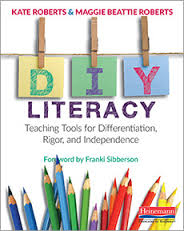
DIY Literacy: Teaching Tools for Differentiation, Rigor, and Independence by Kate Roberts and Maggie Beattie Roberts (2016, Stenhouse Publishers)

imgres

I chose this book because it is so HOT on Twitter right now.  And, I just adore Kate Roberts and Maggie Beattie Roberts.  If you have watched any of the EdCamp PD sessions,  you know what I mean. Kate and Beattie have also created a video series of each teaching tool (from this book) at their website.  You can check them out here.  I know the Demonstration Notebooks will be my first tool to try out in my classroom next fall.

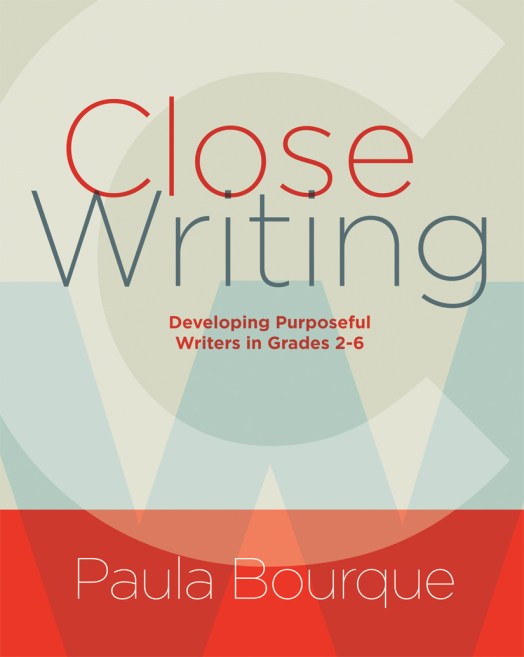
Close Writing:  Developing Purposeful Writers in Grades 2-6 by Paula Bourque (2016, Stenhouse)

Close Writing

This book was also hot on Twitter and it found its way into my Amazon cart when I bought DIY Literacy.  I don’t know how that happens.

I have not started this book yet, but from the introduction, I’m realizing that Paula Bourque’s goal is to help writers read and examine their own writing for understanding and clarity.  I know I need to figure out some strategies for helping my third graders do this as they tend to think their writing is good after the first draft!

Help me Paula!

Lots of Candles, Plenty of Cake by Anna Quindlen (2012, Random House)

AnnaQuindlen.jpeg

Oh my heavens, this lady.  She reflects on her life thus far (she is 60 at the writing of this book), in categories of marriage, stuff, girlfriends, work, our bodies, etc.  It’s her words scribed on the back of this book that lured me to read it:

“It’s odd when I think of the arc of my life, from child to young woman to aging adult. First I was who I was.  Then I didn’t know who I was.  Then I invented someone and became her.  Then I began to like what I’d invented. Ad finally I was what I was again.”

I finished this book last week and it’s still simmering in my being.  I’ll have to carry the book around with me for a while. 🙂

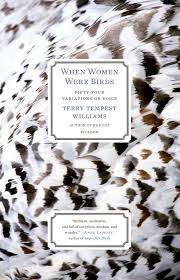
When Women Were Birds:  Fifty-Four Variations on Voice by Terry Tempest Williams  (2012, Picador)

url.jpg

This poetic memoir by Terry Tempest Williams has me on edge.  There is much to figure out.  The book opens with Terry receiving all of her mothers journals when her mother dies.  Her mother instructs her not to read them until after she’s gone.  A month after her mother has died, Terry works up the bravery to begin reading the journals.  She discovers they are all empty.

What the heck?

Yeah – I’m befuddled and so is Terry.  I’m trying to hold her hand through all the confusion and hoping she finds some resolution in her mother’s intentions.  I’m also living my own questions through this story as I wrestle with what to do with all of my own journals and notebooks. Do I really want people reading this stuff after I’m gone?

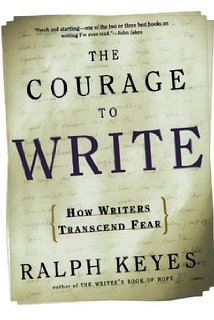
The Courage to Write and The Writer’s Book of Hope both by Ralph Keyes (2003, Holt Paperbacks)

5134cHJQh9L._AC_UL320_SR214,320_                     972978

Yes, I’m reading these two books because I have my own issues as a writer.  I’m hoping that Ralph Keys can shed some light on my problems.

It is important for writers to read about the struggles of other writers.  Not because we like to see others struggle, but we need to know that we are not alone in trying to put words into sentences. In The Courage to Write, Mr. Keys opens with the saga of E.B. White and his troubles as a writer.  I felt a kinship with E.B. White when I learned that he was a gifted procrastinator.

Gifted.

I’d never thought about being gifted at procrastination, but I like the thought and I’m hanging on to it. 🙂

The Rural Life by Verlyn Klinkenborg (2004, Backbay Books)

1081559

My husband bought me a subscription to the Travel and Leisure magazine.  Even though I don’t think I’ll ever save enough to visit Peru or some of exotic places in this magazine, I do enjoy reading the writing.

Verlyn Klinkenborg wrote an article in the Travel and Leisure magazine about Yellowstone National Park.  Having traveled to Yellowstone last summer, it was a must read.  Just reading the first paragraph, I hung on every word. Then, I tore it out of the magazine and studied it – this writing – how did he do this?  I was in awe.  You can read it here.  Give yourself some time, you’ll be rereading it.

Wanting to read more of Klinkenborg’s writing, I discovered some books he’d written about living in the country.  I bought used copies of The Rural Life and Making Hay.

The Rural LIfe is structured in chapters that chronicle the year,  each month, a chapter heading.  Beginning with “January”, he writes about how winter is the only season that has to be relearned every year and about baling twine being the thread of life.  He pays attention to the small details of life.

Being raised on a farm, this book brings up memories that I’d forgotten, along with a reminiscent gratefulness that I was able to live these experiences in my own rural life.

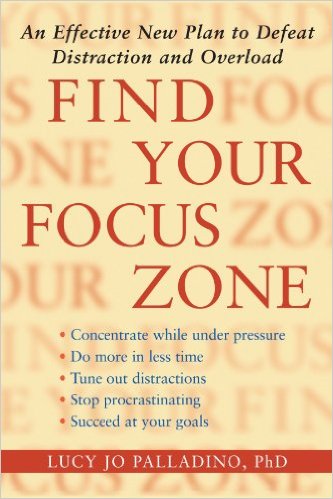
Find Your Focus Zone by Lucy Jo Palladino (2007, Free Press)

51mGXpH0baL._SX331_BO1,204,203,200_

Because I seem to have a little trouble focusing lately, I sought out a book for support. Summer time is when dreams of accomplishing a zillion things swim in my head. Fall usually rolls around and honestly, discouragement seeps in as I examine how few tasks are crossed off of my summer to-do list.  I have somewhat learned to accept this, but still.  If only I could focus.

Lucy claims our old ways of paying attention can’t keep up with the information overload , digital distraction and the new levels of stimulation and anxiety we all have.  Because having control over your attention is a critical skill to being successful, we need to learn some new strategies.  She’s speaking to me here.

“Any man who can drive safely while kissing a pretty girl is simply not giving the kiss the attention it deserves.”  ~Albert Einstein

This book will need to be studied.  I’ll take notes, apply them and probably have to reread.

I’ll let you know if I am successful.

What books are on your summer reading stack?  Please share!

Shari 🙂


The Medicine of Words


IMG_2380.jpg

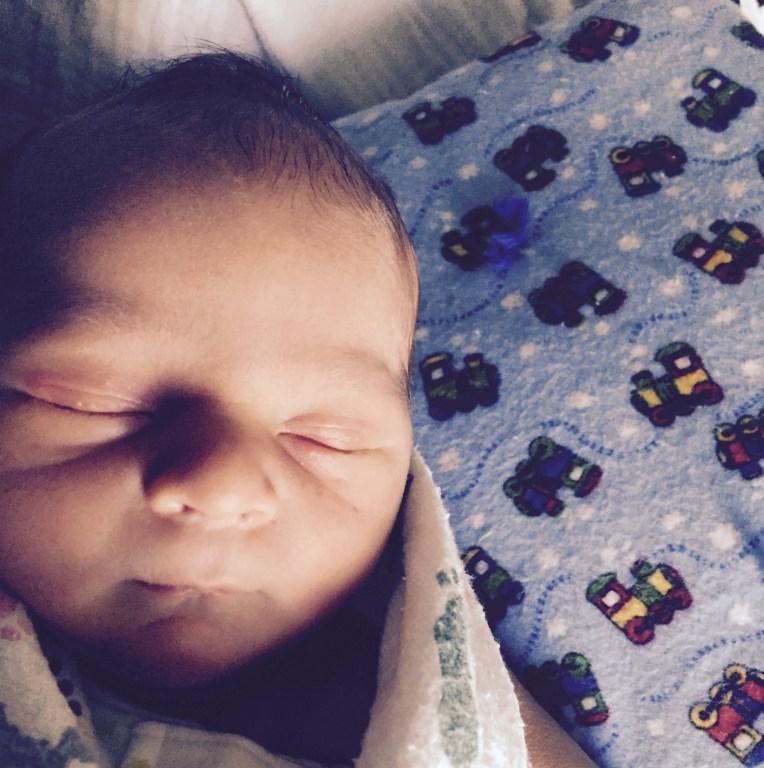
A new generation began the day my grandson, Grayson, was born into this world.  The first grandchild on both sides of his family, he will pave the way for many more to come.

I watched with anxious eyes as he passed the threshold of his mother’s womb to a place where there is air to breath. His lungs surprised at this.  His body traumatized by the brightness.  And, the cold.   Purple.  His head misshapen – and purple.  My daughter, now Aunt Gracie, and I, the sideline observers, frozen in silence, unbeknownst to what is normal.

And what is not.

Within an hour, fresh color warmed his skin and his little head settled into a perfect shape.  A miracle, we breathed.  Awed.  The color came back to our own faces.

Along with Grayson’s arrival, an entire new shipload of worries set port in my mind.

Scrolling Facebook, a dear old friend who belongs to the Grandma Club, posted an article as a “must read”.  I trust what she posts, so I felt a sense of urgency to read it.

The headline, “Letter to Doctors About the Dangers of Insufficient Exclusive Breastfeeding“.  Apparently, one in four newborns do not get enough milk from their mother’s breast milk the first days of life and this deficiency can lead to “long-term neurodevelopmental impairments including autism spectrum disorder, ADHD, sensory processing disorder, severe speech delay, seizure disorders, motor impairments and mental retardation.”

Oh, Heavenly Father.

I felt nauseous and then immediately messaged my daughter to find out how much Grayson had been eating, if the jaundice was improving, were his diapers wet?  Waves of panic sent hot flashes to my already menopausal self.  What should I do?  Perhaps I could buy them a baby scale?  How else would they be able to monitor how much milk he’d be getting?  Perhaps they need to try formula and just forget about breastfeeding.  I kept asking my daughter worrisome questions, but my mind would not rest.  She assured me that the doctor said everything was normal.

“What do they know?” my fearful know-it-all-experienced-mother-self taunting me.

Later that evening, after I’d calmed down a bit, I was drawn into a movie called Spy Games that my husband was watching.  I sat down for a bit.

“Geez, Robert Redford has a lot of lines on his face in this movie,” he said.

“Well, those would be wrinkles my dear, and don’t let the hair fool ya, I think he’s almost 80,” I replied.

“Seriously?” he asked.

“Yup,” I said.  Now, I wasn’t really sure.  I just know that Paul Newman died and they were buddies.  I think.  Well, they were in movies together.  Well, at least that one. . .

I grabbed my Smart phone to double-check my statement.  Fact checking.

“Yup, right here it says he was born August 16, 1936.  He will be 80 this August,”  I have to make sure to let him know that I was spot on with this one.  It’s not all that often I’m right.

I continued to read Robert Redford’s biography, now distracted from the movie.  An interesting heading catches my attention: “The Heartbreaks That Robert Redford Hides“.

He has authorised a new biography – but it is the personal tragedies the actor doesn’t tell us about that make the book remarkable…

On a cool November evening in 1959 Robert Redford kissed goodnight to his 10-week-old son Scott and lay him down in his cot. The rising young star had just moved into a large apartment on West 93rd Street in Manhattan and days earlier had opened on Broadway in new drama The Highest Tree. With his bride of barely a year Lola and still heady from their elopement to marry in Las Vegas, Redford seemed on top of the world. But by the next morning Scott was dead, the victim of cot death, a syndrome that back then did not even have a name. It was the heartbreak of Robert Redford’s life, a tragedy that forever altered his psyche, plunging him into a depression that he only escaped by immersing himself in acting.

Oh Mylanta, Georgia.

Crib death.

Why would God put this article before my eyes tonight when He already knows I’m freaking out about the breast milk?  Seriously, God.  Help me here.  What are You thinking?

I put my phone away and tried to focus on the movie.

After I messaged my daughter.

I just don’t remember these anxieties when I was having my babies.  I’m pretty sure it’s because I was exhausted and just trying to survive.  Or, maybe my mother stayed with me for a few days.  Could it be that I just didn’t have the anxiety that I have now?

No.

It’s more than that.

The internet feeds anxiety.

Any small infraction of abnormality leads me to the worst possible scenarios.  And, I will find them.  Trust me.

It was way better when I didn’t know.

There is a dear wonderful writer whose words I frequently visit.  Her name is Emily P. Freeman and she writes a blog called Chatting at the Sky.  It’s lovely.  The morning after the breast milk/crib death/anxiety/hot flash meltdown, her post showed up in my inbox. On this particular day, she shared the thoughts of a new-to-me writer, Christie Purifoy.

Christie’s words were medicine:

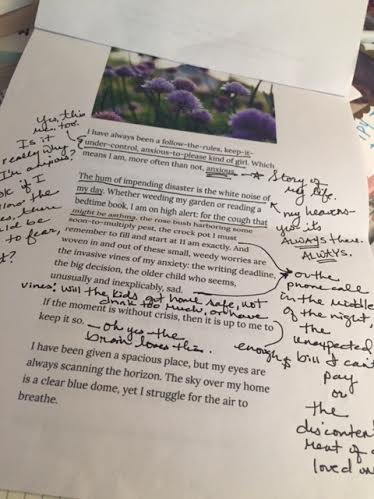
I have always been a follow-the-rules, keep-it-under-control, anxious-to-please kind of girl. Which means I am, more often than not, anxious.

The hum of impending disaster is the white noise of my day. Whether weeding my garden or reading a bedtime book, I am on high alert: for the cough that might be asthma, the rose-bush harboring some soon-to-multiply pest, the crock pot I must remember to fill and start at 11 am exactly. And woven in and out of these small, weedy worries are the invasive vines of my anxiety: the writing deadline, the big decision, the older child who seems, unusually and inexplicably, sad.

If the moment is without crisis, then it is up to me to keep it so.

I stopped reading and shut my laptop and looked around.

Then, I opened it back up to keep reading.

Her first baby, a daughter, was difficult.  Ah-hem.  Mine, too.  But, she writes, this breaking point of feeling out of control is what led her to be grateful for the small moments of grace.  And then, she writes more:

She and I both grew, and my tears dried. Three more babies joined their older sister, and every year I harvested another crop of worries. I grew large again, and the shadow cast by that world on my shoulders obliterated all the tiny, wonderful things.

Umm, yes, me too.  Three more babies.  All more worries.

And finally . . .

It hurts to be sifted by sorrow, and I can glimpse no end to the hurt, and yet I find myself grateful. To be sifted by suffering is to find that all your usual worries have settled down into their proper places. Large uncertainties land in your prayers, plans for the future edge your daydreams, and the small anxieties that once loomed so large on your shoulders float down and far away where they look like just what they are: the dust beneath your feet.

Now lift your eyes and look around you.

Here, at last, is room for each given breath. The doorway is wet with tears, yet this is a spacious place and a land of small wonders.

I can’t even.

How is it that another human being can so precisely craft the words that are the exact replica of the life that you are living?  I am frequently gifted with words from others in this way.  God uses writers (and artists and doctors and musicians and ministers and human beings, basically) to speak to others.  All of us are just messengers.

Immediately, Christie’s words are printed in order for me to reread and talk back to, to Christie really, my new writing friend (all authors I love are my writing friends) pen in hand, jotting down my own thoughts to these words.  Authentic “close reading” at it finest.

77c45827-3849-494e-bb24-0cb7103e6347.jpg

She is me and I am her.  Some words are meant to marinate in the brain, to savor, to digest in such a way that the message is so clear, so understood.  These words were meant to teach me.  It was my job to study them. There are big lessons in here.  Not surprisingly, lessons that have been taught to me before, many times before.  However, I am in a new context – as grandma.  The lesson needed to be retaught.

In education, we call this transfer.  I remember years ago, teaching a listening lesson to third graders.  Later on, a student asked me, “Should we listen here, too, like we did this morning?”

How are we to know that our lessons learned are to be applied in many different circumstances?  Why do we forget?

Because we are humans.

Thankfully, we have teachers and writers to keep reteaching us.

It’s okay.

God knows we’ve got this.

It will all be okay.

I need to look for small wonders.

I receive a text from my daughter after Grayson’s one week dr. visit –

“The dr. said we don’t have to worry about jaundice anymore because he’s gained 6 oz. since Friday! So, I can stop the extra formula, too!”

Okay.

I guess they do know.


Letter To My Unborn Grandson

2050cedf-8b98-4c4b-aa61-b368cba4201d

Today, I am a grandma in waiting. . .

My firstborn daughter was induced yesterday and is still in labor.

“Today is the day,” the doctor said.

I’m not sure what to do with myself, or what to write.

“Write a letter to your unborn grandson,” I heard Gabby say.

“What? What would I say?” I replied.

“Something will come.  Trust me.  Just get it started, I’ll open the door for what needs to be said,” she promised.

“Okay, I’ll try.”

“You might as well, you’ve got nothing else workin’ for ya,”

“I said I would, now you are sounding like Bernice.  Be nice. Geez.”

This is how things go in the morning when I show up to write, whether I have something or not, my writing angel sits and waits and gives me guidance.  I really need to listen to her more because as I read through my old notebooks, she has been telling me to do the same things over and over.  I always have good intentions, but I lack follow through because of distractions or fear.  I need to vow to commit to listen to her.

So. . . here goes. . .

Dear Soon-To-Be-Grandson-Of-Mine,

I’m sorry.  I’m sorry we are all so obsessed with meeting you that we are evacuating you from your warm and safe home before you are ready.  I know that where you are right now is your refuge – your nurture nook – your Sanctuary – your hide-away from the harsh conditions of this world.  If I were you, I’d never come out, the introvert I am.  Maybe you and I will have this in common.

This world is scary.  There are things that could hurt you, even things that could take you away from us.  Alligators, swimming pools, men with guns, drugs and alcohol, illness, depression. Already, you are not even here and I fear what the world could do to you. There are bullies and your first love will break your heart into a million little pieces.  You might have teachers so overwhelmed with today’s standards that they don’t have time to see who you are.  Your coaches might not let you play because they don’t think you are good enough.  Or, maybe you will be an artist, but will fear being who you really are – all these hunters, fishermen and athletes surrounding you.  I fear you will succumb to the pressures of the world and feel the hate from those who are angry and worse yet, that you will be angry back at them.  And, I worry that you will believe  a society that tells us you have to be the best, have the best and get as much as you can.   

I’m here, beautiful grandson, as your grandmother, to oversee what your parents miss in protecting you from all of this.

But, I know, in reality, that I can’t.

I try to have hope for our world – I do.  I’m  praying that you will have strength and resilience and that whatever hurts you also shapes you into a more loving and beautiful human being.  I’m praying for our leaders and that the people of our country have enough love in their hearts to choose a president who leads with this same compassionate love. I’m praying for the people who carry so much hate, those who feel violence is the best answer. I’m praying for those with mental illness, that they receive help and understanding from someone who cares. I’m praying for a world that listens to one another without judgement.  And, I’m praying for our environment to be safe enough for us to keep living here. Our foods are causing cancer, our cell phones causing loneliness.  I just keep praying and praying.

It’s all I have to hang on to.

The prayers of the grandmothers.

But, today, I must focus on the present. Your mother has been in labor for a long time. She goes without food or sleep and I fear her nearing exhaustion. She and your dad have waited for you for so long. Two babies they’ve lost before you, they call them miscarriages. The world calls them not babies yet, but they were, trust me.  They are your siblings – little angels that will guide every step of your time here on this earth. Your parents carry this extra love they were holding for both of them.

Triple Love you’ll get.

So much love waits for you, dear little one.

So, don’t be afraid. Even though we are. We don’t want to push our fears on you. Instead, we will shower you will love, so you feel safe.

Until you are able to go out into the world without us.

That’s where your little sibling angels will take over and they will each take a hand.

That gives me hope.

Love, Your Grandmother

Whoa.

Shed some tears here.  For Pete’s Sake. I honestly have no idea where this stuff comes from.  Well, yes, I do. . .

“Thank you, Gabby,” I say to my dear angel friend who always seems to know what she’s talking about.

“You’re welcome,” she smirks, “All I did was hold the door open.”

And she winks at me.

“My work is done here,” she says.


Stuck Between Being and Doing

33e679f1-ad80-415f-b2ec-cf73e5f0e4c9

Bring on the lemonade. Drag out the lawn chairs. Summer has officially begun. 🙂

The classroom is cleaned, organized and packed up for the summer months.  Reflection mode is in high gear which means time needs to be spent “just being” for awhile. Reading, writing and walking with Sandy (our lab)  have consumed the majority of my past few days. It is glorious.

I am pretty good at doing “downtime”.

Expert – really.  I should give lessons.

Savoring this blissful peacefulness throughout my days, my children all grown and having flown out of the nest, I am learning to accept this pace of life as being “enough” right now. The quietness of an empty house is healing.  My company; myself.   It’s taken years to unlearn the multi-tasking, needing to keep busy, making stuff and going places kind of mentality.  I must be honest, I’m not proud of that person.  (But, dang, she got a lot done.)

Yet. . . (I used yet, instead of but, because there is always a but, but yet feels like but here.)

. . . when my husband comes home from his long day at work,  there is this unsettled feeling that I should be able to tell him all I had accomplished during these past 8, sometimes 10, even 12 hours (yes, he works too much). I mean, the windows need cleaning, my hostas are begging to have the taunting weeds pulled out and Sandy is now afraid of the dust bunnies (I need to buy a vacuum).  This is obvious stuff I should do.

Yes, the residue of this old narrative telling me “I should. . .”

All I can somedays tell my tired husband is that I got some writing done (in my notebook), some reading. . . and I took Sandy for a walk.

He is always happy for me that I got to go on a walk, especially on beautiful days.  So, we talk about Sandy and how she loves to run and play in the water filled ditches.  And, that she smells from this.

I am grateful my husband never complains about the things I don’t do.  He is careful here, as he knows what door he is opening if he goes there. But, my own soul, and mostly my mind, need to feel some sense of accomplishment.

This place in the “Being-Knowing-Doing” gap is a destination I tend to reside in more than I’d like to admit, even though I’ve worked hard to get here.  I’m not sure how long one should stay here.  Because if I stay too long, I can’t seem to come out.

I remain stuck.

In the crux between being and doing.

Carrying an angst that I can not name.

Perhaps it does not have a name.

I need guidance.

I reach for a book that calls to me right now, Do The Work, by Austin Krien.  I can not seem to find it, my writing room in disarray.  So, I grab the next one in line;  Let’s All Be Brave, by Annie F. Downs.  It practically jumps into my hands.

There are underlined words ~

“Courage involves action – like you are going somewhere.  Maps.  Movement.”

“Your life, start to finish, is a map. . . I don’t know where you’ve been and I don’t know where your map will take you.  I only know there will be moments when you feel like the map has turned or changed and moments when you realize you’ve read this map wrong all along.  You will crumple it up and throw it down, only to return to it for direction, once your finish your cryfest.  I get it.  I know.  But it’s your map.  Not my map.  Or my cousin’s map.  Or your spouse’s map.  It’s yours.”

Oh my.

I have to go back to my map.  Where’s my map?  Am I lost at sea?

Fear will set in again.  I know that.

I am not a risk taker – never have been.  The only risky thing I ever do is ride my motorcycle – that’s it.  The males in my family make up for what I lack in risk-taking.  I should not say that.  My daughters are more brave than I can ever be.  They take risks.

But, I need to be braver, I think.

I should be writing. My writing dreams seem to be all stored up in notebooks and there is big fear here:

~of choosing the wrong one to dive into as a project.

~what if I tire of it?

~what if I don’t have time to finish?

~how will I ever stay focused?

~what if no one likes it. . . or even reads it?

~for sure, nothing will get done around here if I commit to writing.

Yes, this must be my problem, I tell myself.  It’s fear.

I glance at my writing desk and see chaos.  Just like my mind.

And, my house right now.

The real answer hits me hard and I really try to ignore it because I really do want to write. But, I must take care of what really needs to be done first.  I scan my shelves for a the third book of today’s writing session:  The Life-Changing Magic of  Tidying Up.

e0a36002-1d02-42b8-9c60-5b96c01aa995.jpg

It’s cleaning.  Creating order.  De-cluttering.  Wash the windows.  Pull the weeds.

Go buy the damn vacuum.

This work is not pleasant.

I text my mother and tell her I can’t stop eating.

“Go outside and pull weeds, there’s no food out there, ” she replied.

Ugh.  How did she know?

Maybe, just maybe, today – I’m supposed to accomplish something.  Just something small though.  I don’t want to set the bar too high. And, I’m afraid of falling off the “just being” wagon.

I’ll tidy up my writing room and go pull a few weeds.

Maybe, make some chocolate chip bars.

That should be enough “doing” for one summer day.

For now.

Until I find my map.


Mondays ~It’s What You’d Expect


0c3a6dac-05af-4707-83f0-3d9936740487.png

There are a few things I hope my third graders always remember when they leave my classroom in June.  First, that reading, writing, poetry and art can bring you great happiness. Second, that learning is hard – and it should be or you’ll never make your brain grow.  And, third, that you create your own reality.  (And, that I loved them dearly.)

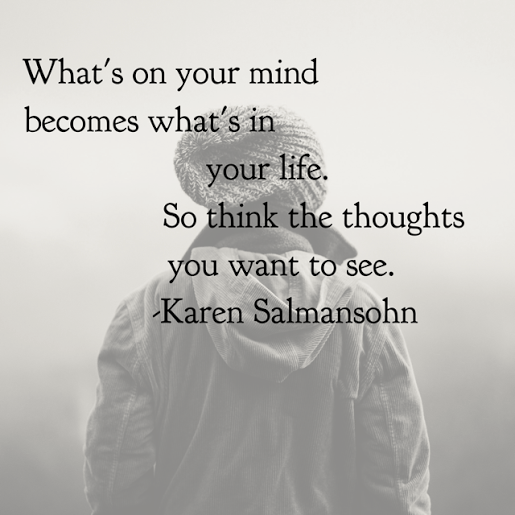
Attitude is such an important part of life.  What we think is what we will most likely see. My kids have heard me say it so many times, I now am hearing them parrot it to me when I need my own attitude shift.

Rainy Mondays are perfect for examining your attitudes.

I shared the following poems with my third graders today.  We talked about what we noticed, felt, and what the author might want us to think.  Then, we compared and contrasted.  I asked my kids which poem was them today.  The hands were split-half and half.

More teaching about how our minds work happened.  We talked about how if we expect to have a bad day, we probably will, because our minds are prepped to notice all the bad things that happen, bypassing any goodness that comes our way. After our conversation, I took another show of hands to see if anyone changed their minds about which poem they want to guide them today.  Of course, many switched teams over to the Happy Monday side.

Seriously.

Why would anyone WANT to create a their own gloomy day?

Shari 🙂

Happy Monday
By Joy Acey
Lying in bed
just after dawn
the sleep of night

is suddenly gone.

I'm listening to doves
cooing away
as I lie here and think
of the coming day.

Monday is the start
of this new week.
There's lots to do
and lots to seek.

I'm making my list
of things to get done.
I'm counting blessings
for lots of fun.

I hope whatever
you have to do
this will be a
great week for you.


Monday Morning

I was happy this morning, as I woke up in bed,
Then realized it was Monday and I faced the day with dread,
For somehow, whatever comes my way, my temper is displayed,
Just mentioning ‘it’s Monday’, my nerves, they become frayed.

The day will be just a ‘ write off’, it’s no good me trying to do
Any sort of reasonable job, things won’t go right. It’s true!
It’s like a ‘cloud’ which hangs around and never let’s you be,
Whatever I attempt to do, disaster follows me.

If I could sleep through Mondays, then that would be just bliss!
Then Mondays wouldn’t have happened, I’d have given them a miss!

© Ernestine Northover

Poem Triggers

Fifty 8 and 9 year olds squished into my classroom this afternoon.  A neighboring teacher home with a sick child and being short of subs, we take turns inviting extra children into our own classrooms for portions of the day.

“What are you going to do with them all?” my teacher friend asks.

“Poetry,” I reply, “We are going to write poems.”

She gave me a look.  You know the one.

I gathered them all and told them that I saw Poetry on my way to school this morning.

They looked befuddled – like Poetry wore clothes or walked around.

“I heard it first, as I stepped out of my car, singing in tweets so happily.  Because is was morning, I’m sure.  I looked to where the poetry was coming from and then I spotted them, in trees.  Hundreds of them.  Flocks.”

“I saw them, too, Mrs. Daniels!” they beamed.  “The robins are out!”

“I stood under the tree for a moment, holding my bags and my coffee mug.  I felt called to take in the poetry – the singing of joyful the morning, the red ripe berries hanging on to the branches patiently waiting for these robins to come to enjoy them, the robins with their bellies overstuffed with either babies. . . or berries.  How was I to know?

A poem was shouting at me.

I skipped inside, whipped off my coat, sat down my coffee mug and scrambled for my notebook.  When a poem arrives, it is the poets responsibility to get it down onto paper quickly, before it leaves and finds someone else.”

I quickly wrote my Fat Robins poem for them on the chart paper.

Fat Robins
There you all sit
Singing joyful tunes
on berry tree
that waited
for you.

But honestly!
Those bellies!

Are there babies in there?

Or do you all
just need
to lay off
on the berries!

They giggled – those third graders.

I told them how poetry finds me and then I have to write it down and how I love to write poetry more than any other kind of writing because. . . .

Poetry breaks the rules.  Free verse, that is.  My poetry form of choice.

After I shared the rules that you can break with poetry (complete sentences, punctuation, capital letters, paragraph form), I set up objects around he room and we wrote small poems. Rocks, a toddler mitten, monopoly houses, a deck of cards, any item I could find in my house in a 2 minute search for stuff.   I showed them how an object can trigger a thought and as a poet, you have to pay attention to that very first thought that pops into your head and grab it by the tail and put it down on paper.  A poet can’t sit around and think too long or the thoughts go away to someone else.  Poet’s get stuff down.  They don’t think stuff up.

Away they went, eager to be poets.  I gave them only three minutes per object and said to write fast, keep your pencil moving and get down your first thoughts.

Always, I am in awe of what children can do.  All I did was model my own poem and get them excited.  I didn’t hover over their shoulders telling them to add line breaks and rhymes or to start here or skip spaces.

This happened on its own.

If these are our quick three minute drafts, I can only imagine where we can go with poetry.

But for now, we will joyfully write. . .

content with the freedom

of free verse.

Shari 🙂


The Unchosen Poems

83fe0fcb-eb44-4452-b179-83b319baf305

The Unchosen Poems

They sit and wait
hidden in books
some still scatter words
not yet crafted
to even live
as a poem yet.

All waiting
and waiting
to be chosen.

Pick me!
Pick me!
they cry
waving their arms
I have something to say!
The children. . .
they need to know me!

But, oh. . .
I squint my eyes
and shake my head
You are
too confusing
too long
and those rhymes?
no. . . I can’t even.
I don’t want the children
to believe that
poems
have to rhyme
you are fun
but. . . no.

Always
they pout
she chooses her pets
Wild Geese
A Snowy Evening
An Apology
What do they have
that we don’t?

It’s so unfair.

~~~~~~~~~~~~~~~~~~~~~~~~~~~~~~~~~~~~~~~~~~~~~~~~

I like to believe that poems choose me and I don’t not choose them.  But, after this poem made it’s way out of my pen this morning, I realized that yes, I do have my favorites. They are chosen over and over to teach whatever I might need to teach that day.  My class pets that I pick on the most are my memorized poems.  They sit at the ready until I call them up for their duty.  I’m sure the unchosen poems think they are spoiled.

The neglected poems were screaming at me this morning, begging for attention.  “You are so lazy”, they cried.  “Give the children something new!”

Ugh.

When the truth speaks, it hurts.

I do rely on these chosen poems and yes,  perhaps they do need a rest.

And, those rhyming poems?

Personally, it was those bloody rhymes that damaged my own beliefs about what poetry really is.  In my classroom, I encourage students NOT to rhyme because immediately they are all trying to force feed these words into their poems just to make a rhyme.  Poems fall apart.  The rhymes take away the heart and meaning of what they are truly trying to say.  If a child is composing a poem about her dog dying, the last thing she should be thinking about is, “What rhymes with dead?”

Action Plan:  Branch out beyond what I already know and believe.  Use a poem I don’t connect with personally.  Perhaps it is meant for a child in my room and not me.

Play with rhymes, but not too soon.

And, for Pete’s sake, memorize some new poems.  Those Wild Geese and Snowy Evenings need a rest.

Shari 🙂

I’m participating in the 2016 NaPoWritMo (National Poetry Write Month) and hoping to blog about poetry for 30 days in April.  Please join me and others by visiting their site!